
Skip to product information
1 of 6
  • Play video
  • Play video

Treatments

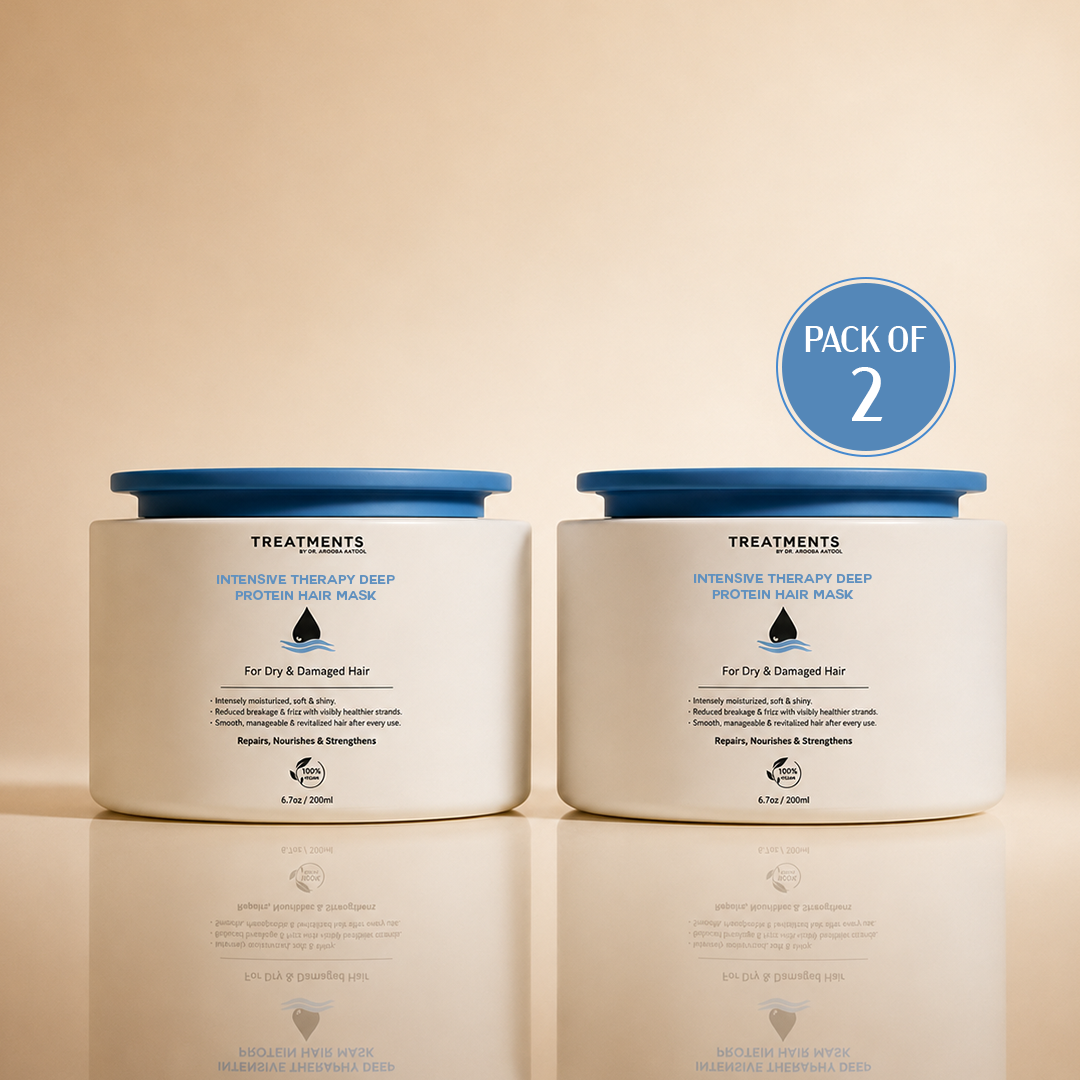
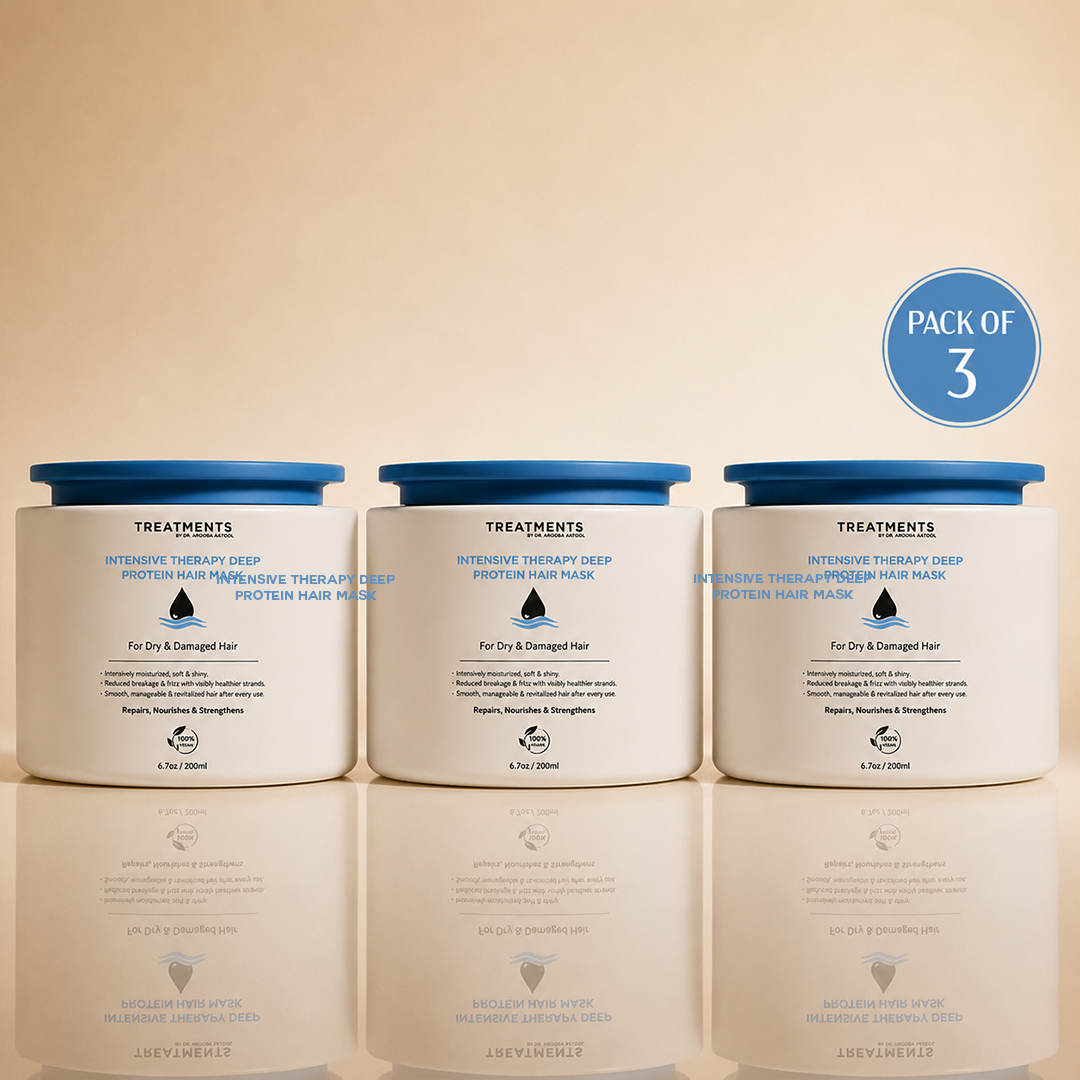
Deep Protein Treatment Hair Mask

50 total reviews

Regular price
Rs.3,999.00
Regular price
Rs.4,900.00
Sale price
Rs.3,999.00
Shipping calculated at checkout.
Unit

Description

A protein hair mask formulated for dry, damaged, brittle, and chemically-treated hair in Pakistan. Repairs hair at the cuticle level — not just on the surface. The at-home equivalent of a salon protein treatment, without formaldehyde and without the price tag.

The hair shaft is 95% keratin protein. Heat styling, bleaching, colouring, hard water and sulphate shampoos strip that protein out over time — which is why damaged hair feels rough, frizzy, mushy when wet, and breaks at the mid-lengths. A deep conditioning hair mask only adds moisture. A protein treatment rebuilds structure.

This mask delivers hydrolysed protein directly into the hair cortex, filling the gaps in damaged strands. Results are visible from the first wash: smoother cuticle, reduced frizz, easier detangling, and hair that actually feels stronger. Use 3–5 times a week for chronically damaged hair, or once a week as a maintenance treatment.

Safe for coloured hair, heat-damaged hair, and the humidity and hard water of the Pakistani climate. Part of Dr. Arooba Batool's complete hair repair protocol — use after the Sulphate-Free Shampoo and before styling.

Benefits of Protein Hair Mask

  • Repairs dry and damaged hair cuticles — rebuilds structure, not just softness
  • Reduces mid-length breakage caused by heat, colour or chemical damage
  • Tames frizz — especially useful in Pakistan's humid climate
  • Detangles without tugging, even on very long or knotted hair
  • Leaves hair visibly softer, smoother and silkier from the first use
  • A professional conditioning treatment you can use at home
  • Safe for coloured, bleached and chemically-straightened hair
  • Supports hair growth indirectly by preventing the breakage that makes hair look like it isn't growing

How to Use Protein Hair Mask

  • Shampoo with a sulphate-free formula — we recommend the Organic Sulphate-Free Thickening Shampoo
  • Gently squeeze excess water from your hair (damp, not soaking)
  • Scoop a generous amount and apply from mid-lengths to ends. Avoid the scalp.
  • Comb through with a wide-tooth comb so the mask coats every strand evenly
  • Leave in for 15–20 minutes. For severely damaged hair, wrap in a warm towel to boost penetration.
  • Rinse thoroughly with cool water to seal the cuticle and lock in shine
  • Use 3–5 times per week for damaged hair, or once weekly for maintenance

Ingredients in Protein Hair Mask

  • Hydrolysed Keratin Protein — The same protein your hair is made of, broken down to a size small enough to penetrate the cuticle. Rebuilds damaged strands from the inside out.
  • Hydrolysed Wheat Protein — Strengthens the hair shaft and holds moisture in. Works synergistically with keratin.
  • Silk Amino Acids — Micro-molecular proteins that smooth the cuticle and give hair a visible silk-like finish.
  • Argan Oil — Adds softness and shine without weighing the hair down. Rich in vitamin E
  • Shea Butter — Deep conditioning base that holds moisture where the hair needs it most — the dry, damaged ends.
  • Panthenol (Pro-Vitamin B5) — Humectant that attracts moisture into the hair shaft and improves elasticity.

CAUTION

  • Avoid contact with eyes. Discontinue use if irritation occurs. Keep out of reach of children. Store in a cool, dry place.

DISCLAIMER

For external use only. Results may vary depending on hair type, damage level, and frequency of use.

Protein Hair Mask FAQs

How is a hair mask different from a conditioner?

Conditioner is a surface treatment — it coats the hair to make it feel smoother in the moment, then rinses off. A protein hair mask penetrates the cuticle and rebuilds the hair from the inside. Conditioner is daily maintenance. A protein mask is structural repair. If your hair is dry, brittle, or chemically damaged, a conditioner alone is not enough.

How do I know if my hair needs protein?

Try the strand stretch test: take a single hair, dampen it, and gently stretch. If it snaps immediately with little stretch, your hair needs protein. If it stretches but feels mushy and doesn't bounce back, it has too much moisture and needs protein for structure. Other signs of protein deficiency: limp curls, excessive breakage, frizz in humidity, and hair that feels lifeless after washing.

Can I use it too often? What is protein overload?

Yes — too much protein can make hair feel stiff, straw-like, and prone to snapping. This is called protein overload. Use 3–5 times per week if your hair is severely damaged. For maintenance, once a week is enough. If your hair already feels balanced (neither dry nor mushy), limit use to once every 7–10 days. Always pair with a moisturising step — a leave-in conditioner or hair oil — to keep the protein-moisture balance.

Should I apply it to my scalp?

No — focus only on mid-lengths to ends. The scalp produces its own oils, and applying a heavy protein mask there can clog follicles and cause buildup. Start applying about 2 inches below the roots and work the mask through to the tips, where damage and dryness are concentrated.

Is it safe for coloured or chemically-treated hair?

Yes — it is specifically recommended for coloured, bleached, and chemically straightened hair, all of which are heavily protein-depleted. The hydrolysed keratin and silk amino acids fill the gaps in the cuticle that chemical treatments create, restoring strength and reducing colour fade.

How long should I leave it on?

15 to 20 minutes for most hair types. For severely damaged or chemically-treated hair, wrap your hair in a warm towel after applying — the heat opens the cuticle and helps the protein penetrate deeper. Do not leave it on for more than 30 minutes. Longer is not better with protein treatments.

Can I use it instead of a conditioner?

Yes — for very dry or damaged hair, the mask can replace your daily conditioner during the recovery phase (2–4 weeks of use 3–5 times per week). Once your hair feels stronger and healthier, switch to using the mask once a week and a regular conditioner the rest of the time.

Will it help with hair growth?

Indirectly. The mask doesn't stimulate follicles, but it stops the breakage that makes hair appear like it isn't growing. Most women in Pakistan complaining about hair not growing are actually losing length to mid-shaft breakage — not slow root growth. Repairing the cuticle preserves length, which makes growth visible. Pair with our Rosemary Hair Growth Oil for scalp-level stimulation.
    Deep Protein Treatment Hair Mask
    Deep Protein Treatment Hair Mask
    Deep Protein Treatment Hair Mask
    Deep Protein Treatment Hair Mask
    Deep Protein Treatment Hair Mask
    Deep Protein Treatment Hair Mask Deep Protein Treatment Hair Mask
    Deep Protein Treatment Hair Mask

    Testimonials